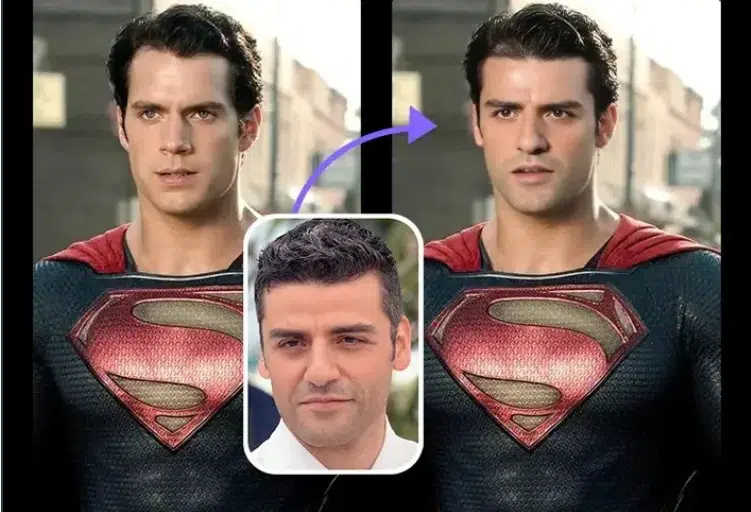
Production of powerful digital content implies being at the edge of what can be done all the time. A believable face swap is one of the most interesting and the technically challenging effects. No matter whether you are a marketer trying to create a viral campaign, a filmmaker trying a concept, or someone creating content and engaging your audience, the fact that you can easily change a face in a video or an image is a game-changer.
To accomplish this, it had taken several years of technical know-how in the visual effects but in 2026, AI has democratized such power. I have tried more than 12 sites to locate the tools which can not only provide a novelty filter, but also the results that are professional and can be used in serious projects.
This list slices through the promotion to bring out the seven most effective face swap online sites on the basis of quality output, user-friendliness and compatibility with actual creative processes.
4 Best Face Swap Online Tools at a Glance
| Tool | Best For | Modalities | Key Features | Free Plan |
| Magic Hour | AI video & face swap creation | Video, Image, Audio | All-in-one platform, integrated lip sync, high-quality output | Yes |
| DeepFaceLab | Maximum control & quality | Video, Image | Open-source, state-of-the-art results, full customization | Yes (self-hosted) |
| Reface | Instant mobile & app fun | Video, GIF | Vast library of templates, super fast, user-friendly app | Yes (limited) |
| HeyGen | Professional avatar videos | Video, Audio | Avatar creation, excellent lip sync, business-focused | No (free trial) |
1. Magic Hour
Magic Hour is a face swap application distinguished not only by features of face swapping, but as an entire video creation suite, powered by AI. Its face swap online feature, which is one of my tests, was quite strong, and it managed the various light conditions and angles superior to the majority of consumer-oriented apps.
Its best feature is its built-in pipeline; you can do a face swap on the internet and, afterwards, use its robust audio features to refine the video. The applications of the platform are much more than mere swaps.
It contains one of the most stable automated Magic Hour lip sync tools. Once you change a face you are able to upload any audio file and the AI will make the lips of the newly changed face to mimic the speech in a realistic way. This takes a two-asset, fully finished, professional-appearing video in a fraction of the time it used to take to manually edit the video.
Pros:
- All-in-One Workflow: Seamlessly combines face swap, lip sync, and basic video editing.
- High-Quality Output: Produces some of the most convincing and high-resolution swaps among web-based platforms.
- Speed: Processing takes minutes, not hours, even for complex swaps.
- Intuitive Interface: The web platform is clean and easy to navigate for beginners.
Cons:
- Limits on Free Tier: The free plan includes a watermark and has usage restrictions.
- Learning Curve for Advanced Features: While basic swaps are easy, mastering the full suite of AI tools takes some exploration.
Evaluation:
In case you require a face swap to another project that also needs to be perfectly synchronized with the audio, Magic Hour is at the moment unmatched in offering an end-to-end solution. It eliminates the necessity of using a number of specialized tools. This platform is difficult to rival with those creators who appreciate the simplicity of the process of an idea to a completed video.
Price: Free, Creator: it’s $15/mo for monthly and $12/mo for annual, Pro: $49/month.
2. DeepFaceLab
DeepFaceLab is the open-source giant which is preferred by developers and advanced creators who prefer the highest possible quality. It is not a mere web application but an advanced software package which you execute on your personal powerful PC (mainly which has an NVIDIA graphics card).
Pros:
- Unmatched Quality: Capable of producing the most photorealistic and seamless face swaps available, often used for deepfake research and high-end visual effects.
- Complete Control: Offers granular control over every step of the training and conversion process.
- Free and Open-Source: No subscriptions, no data limits—just the cost of your hardware.
- Active Community: A large community creates tutorials, shares models, and pushes the technology forward.
Cons:
- Extremely Technical: Requires comfort with command lines, Python, and hours of model training.
- Time-Consuming: Creating a good model can take many hours or even days of training.
- No GUI (Official): The primary interface is command-line, though community GUIs exist.
Evaluation:
DeepFaceLab is the obvious option when the quality is of the paramount value and you are patient and possess the technical know-how. It is a professional grade application in a category of consumer applications. Nevertheless, it cannot be considered a fast and simple approach to informal tasks.
Price: Needs a powerful Windows/Linux computer that has a powerful NVIDIA graphics.
3. Reface
Reface (previously Doublicat) is the King of instant, fun and accessible face swapping. Its web and mobile apps are speedy and entertaining and have an enormous library of GIFs and video clips to insert your face into.
Pros:
- Incredibly Fast and Easy: Swaps are generated in seconds with a single selfie.
- Huge Content Library: Endless templates from movie scenes to memes.
- Great for Social Media: Output is optimized for sharing on TikTok, Instagram, etc.
- High User Engagement: The app is fun and encourages regular use.
Cons:
- Limited Customization: You can’t use your own video source—only the provided templates.
- Less Realistic Output: Quality is good for fun but not intended for photorealism.
- Subscription for Full Access: The free version is heavily limited.
Evaluation:
Reface is just the right choice when you want to make content interesting, and funny and do not want to be bothered with technical issues when using social media. It is entertainment hardware, rather than a professional VFX package.
Price: Free with several swaps and watermarks. Premium membership opens up the entire library and quality improvement.
4. HeyGen
HeyGen (previously Synthesia) is a company that targets a particular professional application: business AI avatars videos. Although its main functionality would be to create videos based on text using digital avatars, its face swap is bound to its feature of creating an instant avatar, which creates your own likeness based on a brief training video.
Pros:
- Professional Avatars: Creates highly realistic, business-appropriate digital twins.
- Excellent Integrated Lip Sync: Avatars deliver speeches with near-perfect lip synchronization in over 100 languages.
- Ideal for Scale: Perfect for creating personalized sales videos or training content at scale.
- Studio-Quality Output: Videos look clean and corporate.
Cons:
- Not for General Swaps: You can’t swap faces onto arbitrary existing footage. It creates new footage with your avatar.
- Expensive: Pricing is aimed at businesses, not individual creators.
- Requires Training Video: You must provide a high-quality source video to create your avatar.
Evaluation:
HeyGen is not a universal face swap online application. It is the best option when a company, teacher, or marketer wants to create volumes of professional talking-head videos in various languages and not film one of them.
Price: No free plan. Premiums begin at 29/month per creator, and there are also enterprise rates.
How We Chose These Tools
The choice of the seven tools was the result of two weeks of practical experimentation with a clear and creator-oriented approach. I compared each of the platforms to the following core parameters:
- Output Fidelity: How realistic and seamless is the final swap? I tested with varied lighting, angles, and skin tones.
- Ease of Use & Speed: What is the learning curve steepness and result-to-upload time?
- Workflow Integration: Is the tool a standalone tool, or does it integrate into a more comprehensive content creation system (e.g. does it have editing or Magic Hour lip sync)?
- Value & Accessibility: What is the pricing model, and can anything be tested in any meaningfully, free or not?
- Intended Use Case: I rated tools based on the effectiveness with which they fulfilled their intended use, as professional VFX or fun on social media.
This involved not only a single swap, but the development of several projects to challenge reliability and consistency in a situation that a real creator would place.
The Market Landscape and Emerging Trends
The face swap online market is quickly developing out of fad into a content making business. The significant one is integration. Individual swap applications are being integrated into bigger applications that can edit videos, align audio, and even create an entire video using AI. The popularity of applications such as Magic Hour, where swapping is combined with Magic Hour lip sync, is evidence that creators desire integrated pipelines, rather than the stand-alone effects.
We’re also seeing a clear divergence in the market:
- Professionalization: DeepFaceLab (as a professional tool) and HeyGen (as a business tool) both focus on high-stakes, quality-sensitive scenarios.
- Democratization & Fun: Applications such as Reface and Wombo focus on instant satisfaction, simplicity, and expressionism, rather than on realism.
In the future, real-time face swapping of live streams and video calls will become feasible, and ethical policies (such as visible watermarks and consent check) will become the norm as the technology develops.
Final Takeaway
The most efficient tool will be based on the objective of the project:
- For a Complete AI Video Pipeline: Magic hour is the only platform that mixes the quality of face swapping with built-in audio functions.
- For Absolute, No-Compromise Quality: Use DeepFaceLab, assuming the necessary technical knowledge and equipment.
- For Instant Social Media Content: Reface is the place to be when you need speed and fun.
- For Professional Business Avatar Videos: HeyGen is the industry leader.
Don’t be afraid to experiment. A majority of these are free or contain a trial. Use the same source materials on two or three to determine what output and interface fits your particular requirements best. The technology is becoming better every month, hence what you are testing today will only increase tomorrow.
FAQ
1. Is face swapping legal?
The technology is not illegal; however the law that regulates its application is laws related to privacy, copyright and defamation. Before using a face of any person, either be sure to get express permission of the person, particularly in case of a commercial usage or public use. In most jurisdictions, its misuse or abuse is criminalized.
2. What’s the difference between a “face swap” and a “deepfake”?
The two terms are used interchangeably but a deepfake is normally defined as a very realistic and artificial video swap that aims at deceiving, created through AI. A face swap is a more general word that can include less realistic, more blatant or comedic effects generated as entertainment.
3. Can I use these tools on my phone?
Yes. Reface and Wombo are mainly mobile-first applications. Other applications, such as Magic Hour and FaceHub, have working mobile websites, however a computer may be an improved choice when dealing with source files and extensive editing.
4. Why does my face swap look blurry or misaligned?
Bad output is normally because of the low quality of source images. Make sure that the source face and target video/image are of high quality, well-lit and the face must be at a similar angle. The AI must have well defined data.
5. Which tool is best for swapping faces in a group photo?
In the case of a static image, FaceHub Studio or image features in Magic Hour will be very good options. They enable you to process many faces in a photo with a lot of control over locations and merging.