As AI and other technological advancements become more prominent, business leaders are increasingly outsourcing software development services. Consumers’ demand for faster services has accelerated this process, and no business wants to be left behind. As the number of software products and services increases, competition to capture the largest user base intensifies. Business leaders are actively looking to outsource software development services to enhance their business operations and operational efficiency.
About 94% of business leaders say outsourcing now plays a major role in workforce transformation. More than half believe their competitors are gaining an advantage by using global and offshore talent, and 67% of leaders say software development outsourcing companies that are ready to develop AI solutions have a better chance of becoming their outsourcing partner.
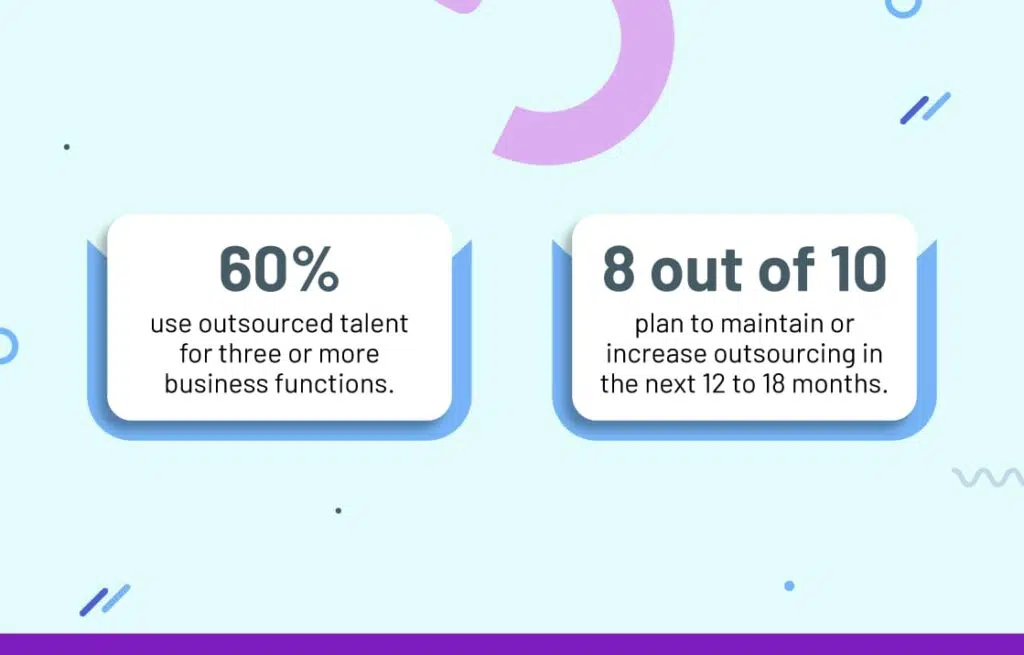
- 60% use outsourced talent for three or more business functions.
- 8 out of 10 plan to maintain or increase outsourcing in the next 12 to 18 months.
Source: Business Wire
Outsourcing software development services is enabling business leaders to overcome challenges.
- 50% of business leaders struggle with inconsistent talent quality.
- 43% find it difficult to manage multiple providers.
- 39% face issues coordinating across time zones.
- More than one-third struggle to align processes across regions or functions, which slows decision-making and impedes real-time problem-solving.
As the requirements for trained professionals grow, companies are reaching out to more outsourcing software development companies to help them manage a wider ecosystem.
Different Types of Outsourcing Models
There are different types of outsourcing models business leaders are leveraging to create high value in their products and services:
1. Offshore Outsourcing
Offshore outsourcing includes working with a software development company on another continent, in a very different time zone. For example, a company in the United States collaborating with an offshore development partner based in India or Southeast Asia. Business leaders often choose this model for access to larger talent pools and extended delivery hours.
2. Nearshore Outsourcing
Nearshore outsourcing refers to hiring a vendor in a neighboring country with a similar time zone. For example, an American company working with a team in Canada or Mexico. This close location makes communication easier and allows teams to work within overlapping business hours.
3. Onshore Outsourcing
Onshore outsourcing means partnering with a service provider within the same country. A business in New York choosing a development firm based in California would fall under this category. Companies choose onshore support when they want local alignment, fewer cultural gaps, and smoother real-time coordination.
This guide will help readers see how outsourcing has progressed beyond cost-driven decisions and is now tied to value, talent quality, and business outcomes. It will also highlight how organizations can manage a broader workforce model, strengthen governance, and partner in ways that support long-term growth and innovation.
The State of Software Outsourcing in 2026
For many modern businesses, maintaining a large full-time workforce has become costly. Salaries, leave, insurance, workspace setup, and equipment can sometimes be overwhelming for businesses, especially startups. Outsourcing is a practical way for a company to delegate tasks or entire workflows to an external partner. When business leaders decide to outsource some tasks, it reduces pressure on internal teams, preventing burnout and improving productivity.
Here’s how businesses across industries are planning to leverage outsourcing services in 2026:
- To meet the rising demand for secure, compliant services, fintech companies are outsourcing services to maintain compliance with all regulatory policies.
- Logistics companies are rapidly relying on external teams for automation, routing systems, and real-time tracking tools.
- Retail firms will outsource more talent as demand for faster product delivery increases. New support for digital storefronts and customer experience systems will be managed more by outsourcing companies.
- As technology becomes more prevalent in the healthcare industry, providers will outsource software development companies to handle the entire tech ecosystem.
Benefits of Outsourcing Software Development Services in 2026
These are the benefits of outsourcing software development services businesses can gain in 2026:
Access to global expertise
Business leaders will get direct access to a wide talent pool skilled in modern technology stacks. This will empower your internal teams to work comfortably with other teams without sudden changes to the working environment.
Enhanced operational efficiency
Outsourcing software development services, especially by startups, will help them eliminate workflow bottlenecks and create delivery models that will facilitate faster time-to-market products, enabling teams to meet tighter deadlines.
Stronger development practices
Experienced outsourcing companies will empower business leaders with stronger strategic thinking capabilities, as they have consistently used agile methodologies that focus on outcomes rather than activities.
Better Cost Control
Outsourcing companies often offer flexible engagement structures with value-based pricing, which aligns spending with progress and output, reducing the need to replace internal infrastructure and hire more talent frequently.
Better focus on core priorities
By outsourcing major software development services, business leaders and teams get more time to enhance customer service strategies, focus on planning new innovative products and services, and strategize on building new revenue streams. By clearly separating strategic and operational responsibilities, outsourcing companies enable business leaders to focus on what matters most!
Future of Outsourcing Beyond 2026
Outsourcing is expected to evolve even further as companies move deeper into automation and cloud-first operations. The focus will shift from filling short-term skill gaps to building longer, more collaborative partnerships where external teams support a broader share of digital work.
More enterprises will rely on outsourcing providers to maintain data pipelines, strengthen security, and keep systems aligned with new regulations. Providers with strong experience in cybersecurity, cloud engineering, data platforms, and industry-specific tools will see higher demand. Instead of searching for talent across multiple vendors, leaders will prefer partners who can offer integrated teams and smoother delivery.
Overall, outsourcing will become more closely tied to business strategy. Companies will expect shared accountability, clear outcomes, and delivery models that support continuous improvement. This shift will make outsourcing less transactional and more like an extension of the organization’s own workforce.
Conclusion
Outsourcing has moved well beyond cost savings. It now helps businesses strengthen their operations, access skilled talent, and adopt new technologies without disrupting internal teams. With technology advancements, companies will depend even more on partners who can guide them through governance challenges, integration issues, and the growing need for specialized skills.
The companies that gain the most will be those that build strong partnerships, set clear expectations, and stay open to new models of working. With the right approach, outsourcing will continue to support innovation, stability, and long-term growth well beyond 2026.